What Is Blockchain and How does it Work
Before we can talk about how blockchain moved beyond currency, let's take a look at what it actually means. By definition, a blockchain is a shared, digital ledger that records information in a way that is nearly impossible to change, hack, or cheat.
Unlike a traditional database or a bank ledger that is owned and managed by a single central authority, a blockchain is decentralized. This means the official record is distributed across a vast network of computers worldwide, ensuring that no single person or organization has total control.
How It Works: The Chain of Blocks
Blockchain technology gets its name from how it stores data. Instead of storing data and transactions in one long list, they are grouped into blocks. Once a block is filled, it is sealed with a unique digital fingerprint called a hash and then cryptographically linked to the previous block, which creates a permanent, chronological chain.
If anyone attempts to tamper with a transaction or data in an old block, the digital fingerprint of that block changes, which breaks the connection to every subsequent block in the chain. This built-in security makes the blockchain a definitive record that everyone on the network can trust without needing a middleman.
Key Characteristics of the Blockchain Technology
The main features of the blockchain technology include:
- Immutability: Once the data is written to the blockchain and approved by the network, it cannot be deleted or edited.
- Transparency: In public blockchains, every participant has access to the same ledger, and anyone can view and verify every transaction.
- Consensus: The network uses specialized math known as consensus mechanisms to agree on which transactions are valid, ensuring that only legitimate data is added to the chain.
The Four Types of Blockchain

Depending on the needs of the users, the blockchain network can be divided into four main types:
Public Blockchains
These are completely open and decentralized. This basically means they have no restrictions. Anyone can join, read, or write to the ledger. This is the standard for global assets like Bitcoin or Ethereum.
Private Blockchains
These are restricted networks, usually managed by a single organization. They are often used as an internal support system for companies to track inventory or private data while maintaining high speed and privacy.
Consortium Blockchains
These are shared private chains managed by a group of organizations like a group of banks or shipping companies. This allows competitors to collaborate and validate transactions without giving one company total control.
Hybrid Blockchains
These offer the best of both worlds. A company can keep its private data on a restricted chain while using a public chain to provide official proof of transactions to the outside world.
How Blockchain Evolved beyond Currency
Blockchain has evolved from being simply attached to Bitcoin to becoming a universal tool for the global economy. By moving beyond conversations about the price of Bitcoin, the technology is now powering Decentralized Finance (DeFi), rebuilding banking systems, integrating NFTs with gaming platforms, and pushing the tokenization of real-world assets.
In the next segments, we'll look at the different ways blockchain has moved beyond currency and now supports global financial systems.
Decentralized Finance (DeFi)
Decentralized Finance, or DeFi, has changed massively, especially as it has moved away from being an experiment for financial institutions to becoming a serious and resilient alternative to traditional banking.
DeFi uses blockchain technology to recreate entire financial systems, such as lending, borrowing, and trading, without the need for a central authority like a bank or a brokerage firm. The primary engine behind this system is the concept of programmable money. By using smart contracts, which are self-executing pieces of code, DeFi can automate complex transactions that previously required human intermediaries.
These digital contracts act as the final word on an agreement, automatically matching buyers with sellers or lenders with borrowers. Because the code is transparent and immutable, it effectively replaces the need for expensive brokers and clearinghouses, reducing heavy transaction fees and delays that often affect transactions in the traditional financial world.
One of the most successful applications of this technology is found in lending and borrowing protocols. These platforms have grown into a global, permissionless utility by utilizing over-collateralized lending.
In this system, a user provides a digital asset as a deposit to borrow another asset, ensuring the loan is always backed by a verified value. This removes the fear that comes with traditional credit checks, providing a smooth and efficient way for individuals to manage their liquidity and build wealth on their own terms.
Tokenization of Real-World Assets (RWA)
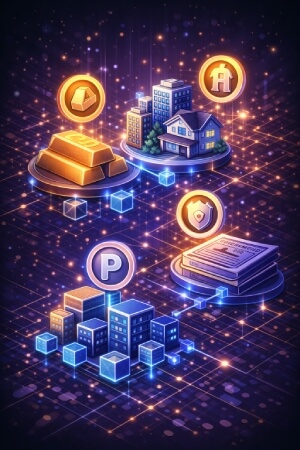
One of the most important developments in the era of digital finance is the migration of traditional, physical assets into blockchain formats.
Known as the Tokenization of Real-World Assets (RWA), this process involves creating a digital representation of a physical object, such as a piece of real estate, a gold bar, or a corporate bond on a ledger. By doing so, we are essentially giving digital values to static physical properties, allowing them to move across borders with the same speed as an email.
Traditionally, high-value assets like private equity or commercial buildings were difficult to sell quickly and required a lot of paperwork. Tokenization allows for fractional ownership, where a million-dollar property can be divided into thousands of digital tokens.
This simple idea lowers the barrier to entry, making it easy for everyday investors to own a small piece of a high-performing asset that was once reserved for the elite.
We are also seeing the rise of on-chain treasury bills and government bonds. Major financial institutions are now using blockchain to manage these high-quality debts because it provides a definitive record that is updated in real-time.
By moving these assets onto a shared ledger, the middlemen or institutions that traditionally managed the paperwork are bypassed. This reduces the time it takes to settle a trade from several days down to just a few seconds.
The long-term impact of this change cannot be overstated. When physical assets are tokenized, they become part of a global, 24/7 market. A house in London or an office building on Wall Street can be used as collateral in a decentralized lending protocol halfway across the world.
This creates a safety net for global wealth, ensuring that value is no longer trapped by geography or outdated banking systems. As more institutional funds move toward this model, the tokenization of the physical world will become the industrial standard for how we define and exchange value.
The Era of NFTs
While the early days of NFTs were dominated by somewhat overpriced digital art, NFTs have now quietly matured into a functional tool for proving ownership and access.
In 2026, we are moving into the utility era where an NFT is valued less for its visual appeal and more for the rights and benefits it grants to the holder. This turns the NFT into a digital deed, which is a permanent, tamper-proof record that bridges our online and offline lives.
One of the most practical applications of this technology is in digital identity and access. Event organizers are beginning to use NFTs as digital tickets to eliminate the massive problem of fraud and scalping. This technology works because an NFT ticket is a unique asset on a blockchain, meaning it cannot be duplicated, and its resale can be capped or tracked by the organizer.
For the creator economy, NFTs have changed how many view the concept of intellectual property and royalties. In the past, artists and musicians often lost control of their work once it entered the secondary market. Today, smart contracts allow creators to bake royalty rules directly into their digital assets.
Every time an NFT is resold, a percentage of that sale is automatically sent back to the original creator. This automated system ensures that artists are fairly compensated for their long-term influence, creating a more sustainable routine for creative professionals.
We are also seeing NFTs play a vital role in gaming and virtual property. In modern virtual worlds, players have true ownership of their in-game items, such as skins, tools, or virtual land.
Given that these items are stored as NFTs, they are interoperable, meaning a player could theoretically use a sword earned in one game as a decorative item in their virtual home in another game. This breaks down the walls between different digital platforms, giving players the freedom to move their value wherever they go.
Web3 Infrastructure: The Decentralized Internet
While decentralized finance and NFTs are the most popular uses of blockchain, it is also used in Web3. Web3 infrastructure, which is beginning to change how the internet works, involves replacing centralized services like cloud storage, data providers, and identity systems with decentralized alternatives.
This infrastructure is designed to create a more resilient internet that isn't dependent on a handful of tech giants, providing a digital foundation that is both censorship-resistant and user-owned.
Enterprise Blockchain
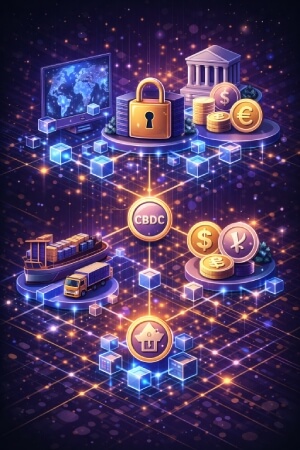
While public blockchains capture most of the headlines, some of the most important developments are happening within the world’s largest financial corporations.
Enterprise blockchain refers to the use of private or hybrid ledgers to solve long-standing problems that have affected global business for decades. These organizations aren't using blockchain for speculation, they are using it as the industrial standard tool to streamline supply chains, verify authenticity, and move money across borders with incredible speed.
Enterprise blockchain is also changing how cross-border payments work. The traditional SWIFT banking system is often slow and filled with high transaction fees and multiple intermediaries. Major finance corporations and central banks are now testing and deploying stablecoins and Central Bank Digital Currencies (CBDCs) on blockchain networks to bypass these inefficiencies.
This allows for near-instant settlement of million-dollar transactions at any time of day, providing a strong support system for global trade that operates outside the confines of traditional banking hours.
With enterprise blockchain, we are also seeing collaboration between different companies using separate blockchains. What this means is that before, different companies might have used different, isolated blockchains that couldn't talk to each other.
Now, there are new network protocols that will allow a private shipping blockchain to securely share data with a public insurance blockchain. This connectivity makes it easy for companies all over the world to share records and track data smoothly. This way, the global economy now feels like one broad system instead of layers of separate blockchains.
Blockchain and the Transformation of Digital Systems
Blockchain has definitely moved on from being the language of Bitcoin. It now accelerates global finance systems while providing a base for those who are building the internet of the future.
With global corporations and governments adopting the use of blockchain technology, it's safe to say the future of finance and the internet holds a lot of promise and it lies on how well we can harness the potential that this technology holds.
In a significant shift for cryptocurrency markets, Bitcoin option traders are now placing substantial bets on the digital asset reaching the $80,000 mark. ##Derivatives #BITCOIN #CRYPTOCURRENCY #options #tradinghttps://t.co/jaPjcAS25b pic.twitter.com/q24fXsllXa
— BitcoinWorld Media (@ItsBitcoinWorld) March 11, 2026